
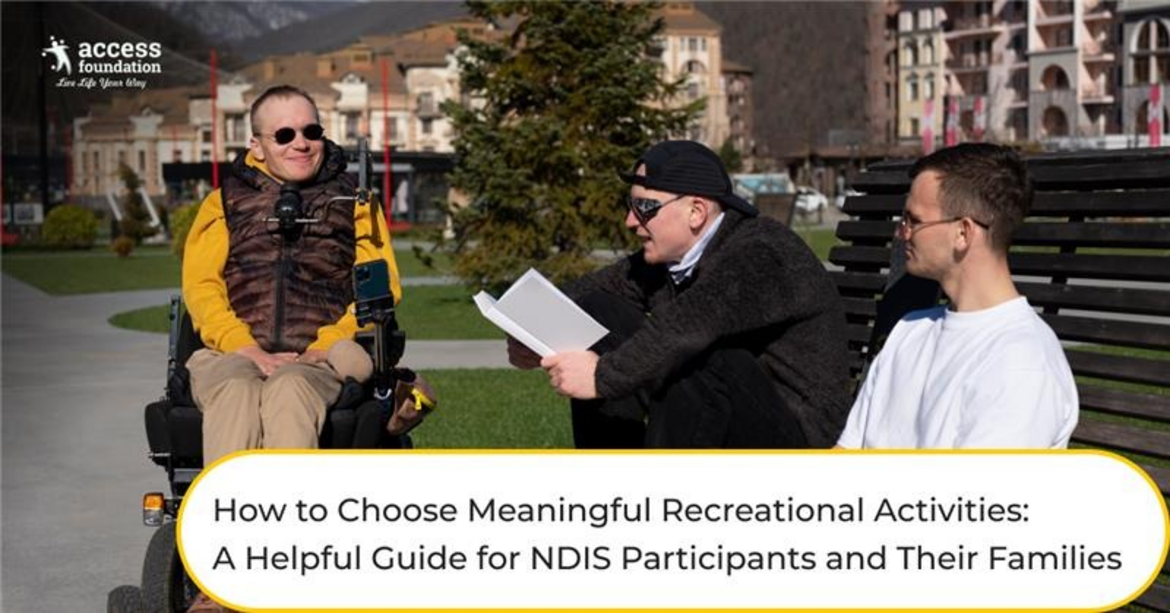
How to Choose Meaningful Recreational Activities: A Helpful Guide for NDIS Participants and Their Families
Recreational activities are very important in a person's life. They provide happiness, ways to express oneself, opportunities to move, build relationships, and a feeling of community. However, when you are helping someone who is part of the NDIS, it can be tough to figure out which activities will really be meaningful to them. Families often want to help, but they're unsure where to start. Participants often know what they enjoy but lack the guidance and confidence to explore new experiences.
Both perspectives matter. And when participants and families make decisions together, recreational activities become more than something to fill the week. They become moments of growth, bonding, and well-being.
This guide brings the two experiences together, offering a practical yet compassionate approach to choosing recreational activities that feel right for everyone involved.
What Makes an Activity Meaningful?
Before looking at what's available, it helps to stop for a moment and reflect on what you hope recreation will bring into your life. Everyone's requirements is different, and that's what makes this journey so personal.
For some individuals, participating in NDIS Recreational Activities helps them get healthy or move better. On the other hand, for others, it is a way to boost self-confidence, learn new things, or have fun doing something they love. Many people want to find opportunities to meet new friends, feel less lonely, or get back in touch with their community.
Once you understand what you're hoping to get out of the experience, whether it's fitness, creativity, relaxation, fun, or friendship, the search becomes much clearer and a lot less challenging. It leads to a clearer, calmer, and more supportive decision.
Understanding What Works for You
Every person has unique strengths, comfort levels, sensory preferences, and support needs. Rather than choosing an activity because it looks good on a brochure, it helps to choose something that feels realistic and enjoyable for your abilities today.
Consider questions like:
- Mobility requirements: Does the activity involve walking, lifting, or balance? Is it adaptable?
- Sensory preferences: Busy environments or quieter places? Indoors or outdoors?
- Support level: Will you need one-on-one support, supervision, transport, or equipment?
- Routine vs flexibility: Some people thrive with structure; others prefer variety or spontaneous options.
When families and participants recognise these needs together, it becomes easier to choose activities that feel safe, manageable, and enjoyable.
Exploring Activities That Support Growth and Joy
Once you have a sense of your interests and comfort, you can begin exploring what's possible. Recreational activities come in so many forms, and it's important to stay open to options that might surprise you.
Here are some common categories that NDIS participants and families explore together:
1. Creative Experiences
Art, music, drama, photography, and craft workshops change your mood from dull to productive. It brings that beautiful expression where your emotional state of mind vanishes, which boosts confidence, and you discover your hidden talents.
2. Physical and Outdoor Activities
Swimming, dancing, walking in groups, bowling, yoga, bike riding, and adapted sports are great for improving strength, mobility, energy, and mental well-being.
3. Community and Social Activities
Doing marketing, attending cultural events, movie nights, theatre, and social groups strengthens belonging and reduces isolation, especially when shared with family or support workers.
4. Relaxation-Focused Experiences
We all love Mother Nature and enjoy scenic beauty and fresh air. Hence, nature walks, gardening, meditation, and sensory-friendly programs are ideal for all, especially those who prefer calm, grounding environments.
5. Multi-Activity or Holiday Programs
Camping, day trips, and adventure sessions are wonderful ways to build independence and try a variety of experiences at once.
The key is not to pick the best category; it's to find what feels right today for your physical and mental health, knowing preferences can grow and evolve over time.
Trying New Activities With Support and Confidence
Trying a new leisure activity can feel exciting, but also a bit challenging, for both participants and families. This is completely normal.
A gentle approach works best:
- Start with short, low-pressure sessions
- Talk openly about what feels good or what feels challenging
- Change or switch activities if something doesn't feel right
- Acknowledge not only the big wins, but also the small successes
- Keep in mind that just trying is just as valuable as succeeding.
The aim is not to reach perfection, but to make connection, trust, and joy grow.
How Families Can Play an Empowering Role
Families are a significant part of the NDIS provider journey through leisure activities. They:
- Assist in creating a safe emotional environment
- Help with practical matters
- Promote adventure
- Shower with praise for the steps taken.
But most importantly, they help the participant feel seen and supported, not pushed or pressured. Some families attend the first few sessions alongside the participant. Others help with planning, transport, communication, or simply being present.
How Access Foundation Supports Both Participants and Families
At Access Foundation, we understand that meaningful recreation is not one-size-fits-all. We take time to listen to participants and families, learning what matters most before making any recommendations.
We offer:
- A wide variety of recreational activities, sports, arts, community outings, nature programs, social experiences, and more
- Support workers who build trust, understand sensory and emotional needs, and encourage independence.
- One-on-one or group participation options
- Transportation and accessibility assistance
- A patient-centered approach that prioritizes comfort, respect, and pleasure
We collaborate with the participants and their families, all the time making the experience supportive, inviting, and actually fun.
Final Thought
Choosing recreational activities is not only about keeping fit; it is also about discovering things that really bring happiness to your life. When you know your objectives, look at different possibilities with a positive attitude, and select the places that fit your requirements, recreation turns into a flow of joy, self-assurance, and deep bonds.
If you want advice in choosing or exploring activities, the Access Foundation will assist you to make the journey clear and gentle.
Frequently Asked Questions (FAQ)
1. What is the best way for participants and their families to cooperate in selecting a fun activity?
A: Start with an honest talk about what everyone likes, how comfortable they are, their goals, and what support they might need. Including both views makes it easier to find activities that feel significant.
2. What if someone wants to try something new but is a little nervous?
A: Try starting with short, easy sessions that are low-pressure. Family members or support helpers can join in the first few times to help build confidence.
3. Can NDIS funding help with recreational activities?
A: Absolutely. NDIS covers many recreational activities if they help with independence, learning new skills, joining social activities, or improving overall well-being.
4. How much should families participate in deciding on activities?
A: They should be involved as much as it feels helpful. Some families may join in early sessions, others might help with planning, or just offer support. The aim is to encourage the participant without giving them too much pressure.