
Benefits of Regular Recreational Activities on NDIS Participants' Physical and Mental Health
Regular recreational activities are one of the most important practices of a healthy and enjoyable lifestyle, particularly for people with disabilities in Australia receiving assistance from the NDIS. Such activities, if funded and backed by the NDIS, are the major factors contributing to richer physical health, a healthy mental condition, and greater social inclusion.
Through recreation, participants get access to new opportunities to grow their self-esteem, develop independence, and relate to their communities, which are all necessary for improving the overall quality of life.
This article goes into detail about the various ways through which recreation affects NDIS participants' lives, and it shows how recreation in its different forms is a key factor in physical and mental health nurturing.
What is the Meaning of Recreation?
Recreation is generally understood as a wide range of activities that people do in their spare time, mainly to relax, rejuvenate, and have fun. There is more to leisure activities than just time consumption; they balance emotions, improve fitness, and allow the individual to meet and interact with other people.
Types of Recreational Activities
NDIS-funded recreational activities come in different kinds, and each has its own advantages:
Physical Recreation:
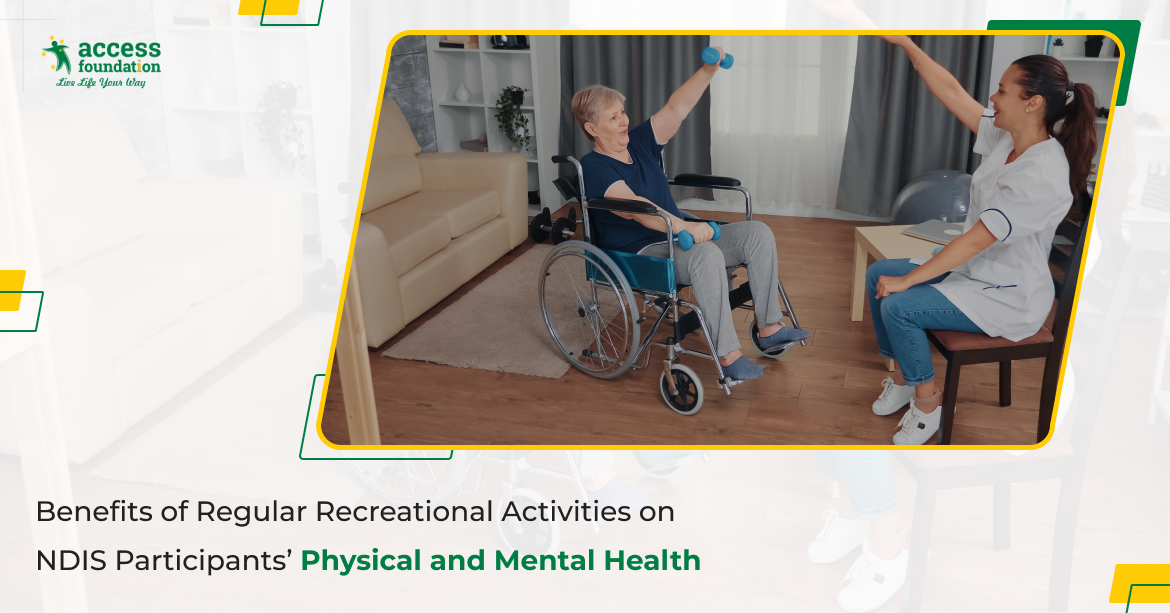
This includes activities that help with physical health and movement. It builds strength, flexibility, and stamina. Examples are walking clubs, swimming lessons for people with disabilities, wheelchair basketball, and exercises from a therapist.
Mental Recreation:
This type aims to get the brain working with things like puzzles, reading groups, or workshops to learn new skills. These activities help keep the mind active and sharp.
Social Recreation:
Activities like community clubs, group trips, and workshops on social skills help people connect with others, get involved in the community, and feel less lonely.
Outdoor Recreation:
This invites people to enjoy nature through gardening, hiking, or organized nature trips. Spending time outside is good for both physical health and relaxation.
Creative Recreation:
This includes art classes, music therapy, drama groups, and crafts, giving people a chance to express themselves and feel better emotionally.
Recreation for Mental Wellbeing
Recreation activities have a huge impact on the mental health of the NDIS participants:
Reducing Depression Symptoms:
Engaging in recreational activities induces the brain to produce two important happiness neurotransmitters, known as serotonin and dopamine, which in turn help to reduce the feeling of sadness. For example, a person who is in a music therapy group may experience that his mood improved and that he or she maintains a positive outlook.
Reduction of Stress and Anxiety:
Physical exercise and mindfulness training reduce stress hormones; Therefore, individuals generally experience low levels of stress. NDIS-funded yoga classes exemplify this interaction, leaving the participants more peaceful and healthy.
Improving Cognitive Function:
Mind-challenging activities like solving puzzles and attending hands-on classes can be considered a workout for the brain in terms of improving the areas of memory, attention, and problem-solving, and hence keeping the brain active and sharp.
Building Friendships and Social Connections:
Sports and other recreational activities makes individuals meet new people. It builds a sense of belonging, which is very important when it comes to receiving emotional support and counteracting feelings of loneliness.
Feeling Happier and Emotion Management:
Participation in these activities on a regular basis becomes a training ground where individuals would be able to improve their emotional skills and mood stability and thus cope better with everyday struggles.
Recreation for Physical Wellbeing
Physical wellbeing through recreation has advantages that are just as important, and which are as follows:
Encouraging Better Sleep:
Regular sleep patterns, which are the result of being active, lead to better and more refreshing sleep, which is what most people look for.
Weight Control:
A rare sedentary lifestyle helps the body break down food quickly and makes it easier to keep the body in the correct weight zone, reducing the risk of overweight-related diseases.
Increasing Strength and Flexibility:
Individualized exercise programs, stretching, and swimming contribute to muscle strength and the ability to move joints, which is critical for daily activities.
Boosting Immune System Function:
Immunity is enhanced by an active lifestyle, so one gets less infected.
Lowering the Chance of Long-Term Diseases:
Taking part in regular physical activity lessens the risk of high blood pressure, developing diabetes, and other chronic diseases that most disabled people suffer from.
Benefits of Outdoor, Social, and Creative Recreation
Outdoor Recreation
- Physical Recreation Activities: Gardening therapy is an easy-going method to keep fit that is not just a little bit good for your hands, but also makes you move. Furthermore, whereas adapted hiking is something that you do with a gentle trainer leading you, you gain stamina and fitness.
- Mental Recreation Activities: Mindfulness through nature walks and being outside is helpful for people because it takes away their stress and gives them mental clarity by linking them with the tranquil outdoor environment.
Social Recreation
- Building Community Connection: People, when they join local clubs or take group art classes, get the chance to meet and support others through friendship building.
- Enhancing Teamwork: Participation in team sports and visual or performing artistic projects in such a way that it improves communication, trust, and teamwork, qualities that are needed in a community.
Creative Recreation
- Emotional Expression and Healing: Art therapy and music classes, for instance, are ways that a person can express feelings hard to verbalize, thus leading to an emotionally well-off person.
- Skill Development Increases Confidence: Simply put, learning to paint, playing an instrument, or acting in a play is a way to gain new knowledge. In the long term, however, this increases confidence and gives them a sense of pride in the effort they have made.
Embrace Recreational Activities for a Balanced Life
Recreational activities financed by the NDIS not only improve but also support good physical condition, good NDIS mental health service, and more enjoyable social interactions for the concerned people. The variety of recreation allows the participants to find out the fascinating activities that not only accommodate their interests and needs but also promote their independence and happiness. In other words, the participants of NDIS, by accepting recreational activities, turn their struggles into opportunities for personal development, relationships with others, and overall health.
FAQs
Q1: What are the recreational activities funded by NDIS?
A: NDIS provides funding for activities such as sports and stamina, creative art, social clubs, and nature and outdoor adventures that are favorable for both physical and mental health.
Q2: How do recreational activities contribute to mental wellbeing?
A: They reduce depression and anxiety problems, strengthen the processes of recognition, improve the mood, and create and maintain social interactions.
Q3: Do recreational activities affect physical health?
A: They are indeed, as they lead to the heart's health, power, limberness, improved sleep, and a lower chance of chronic diseases.
Q4: How does one go about locating a recreation NDIS service provider?
A: The registered NDIS service providers, such as Access Foundation, will be there to help with the identification of programs that are right for you, and also they will provide the necessary support.
Q5: Does NDIS provide funding for any outdoor recreational activities?
A: Yes, activities like walking in nature, tending to gardens, and participating in adapted sports outdoors are among those funded by the NDIS.