Top NDIS-Funded Recreation and Fitness Activities That Empower Wellbeing
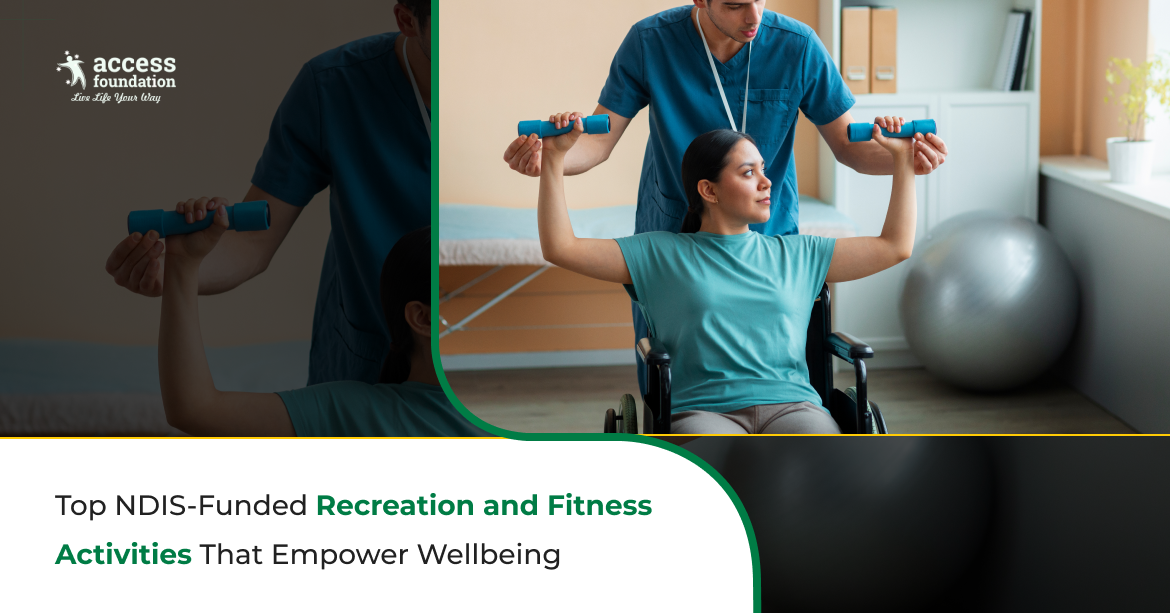
Short answer: the NDIS usually funds the support you need to take part in recreation and fitness, such as a support worker or transport. It usually does not pay the activity's own cost, such as a gym membership, tickets or class fees. Therapist-led exercise tied to a health or mobility goal can be funded.
That difference is where most plans and expectations go wrong, so this guide explains it first, then covers the activities participants commonly choose and how to get them into your plan.
What does the NDIS fund, and what doesn't it?
The NDIS funds support that are reasonable and necessary and linked to your goals. For recreation, that is mostly the extra cost caused by your disability, not the everyday cost of the activity.
| Cost | Usually funded? | Details & Conditions |
|---|---|---|
| Support worker to attend with you | Often yes | Needs funding in your plan and a disability-related need. |
| Transport to and from the activity | Sometimes | Depends on your transport funding and goals. |
| Therapist-led exercise (physio, exercise physiologist, hydrotherapy) | Often yes | Must link to a health, mobility or independence goal. |
| Adaptive equipment | Sometimes | Usually needs a therapist's assessment. |
| Gym or club membership | Usually no | Treated as an everyday living cost. |
| Tickets, class and entry fees | Usually no | Ask about the support worker's own entry fee separately. |
Funding sits mainly under Core supports (social and community participation) and Capacity Building supports (increased social and community participation). There is no separate “recreation budget”. Funding rules also don't vary by region or provider; the NDIS applies the same rules nationally.
Popular recreation and fitness activities for NDIS participants
Adaptive sports and fitness
Wheelchair basketball, modified swimming, and group fitness classes can build strength, coordination and confidence. You can fund the support to attend, and you can fund one-on-one sessions with a physiotherapist or exercise physiologist if they link to a health goal. Our hydrotherapy pool and rehab gym offers therapist-led options. See also our guide to NDIS-funded hydrotherapy in Perth.
Art, music and drama
Painting, music and drama groups give an outlet for creativity and a regular place to meet people. A support worker can attend with you where needed. Materials are normally your own cost unless a therapist includes them in a funded program.
Social clubs and outdoor activities
Park visits, museum trips, walking groups and community events help build routine and connection. Funding commonly covers the support worker and transport, not entry fees. Our people skills and community programs and recreational activities service run supported group outings.
Relaxation, yoga and mindfulness
Gentle yoga, meditation and wellbeing workshops can help with stress and sleep. If delivered by an allied health professional as part of a goal-based program, they may be fundable; a general studio class usually is not, but the support to attend may be.
How to get recreation and fitness into your NDIS plan: 4 steps
- Set a clear goal. “Join a weekly swimming group to build strength and meet people” works better than “do more activities”.
- Talk to your planner or support coordinator. They check which funding line fits. Our support coordinators can help.
- Get evidence if it is therapy-based. A physiotherapist or OT report supports requests for exercise programs or equipment.
- Choose a provider and confirm costs in writing. Check who pays for what: support worker, transport, activity fee. See our transport service for getting there.
Why recreation matters
Regular activity can support physical health, social connection and confidence, which are common NDIS goals. The NDIS publishes its own wellbeing outcome measures, which you can read on the NDIS research and evaluation site, and national participant data on the NDIS data explorer.
NDIS recreation FAQs
How can I tell if an activity is covered by my plan?
Check whether your plan has community participation funding and whether the activity links to a goal. Your support coordinator or planner can confirm. In general the NDIS funds the support you need to take part, not the activity fee.
Can the NDIS pay for a support worker to come with me?
Often yes, if you have the funding and need the support to take part safely. The worker's time is usually funded; entry fees are handled differently, so ask your planner or provider.
Does the NDIS pay for gym or club memberships, tickets and class fees?
Usually not. These are generally everyday living costs. The NDIS may fund the support to attend, or a therapist-led program linked to your goals.
Is there a set limit for recreation funding?
There is no separate recreation budget. The amount depends on your goals and the funding in your plan.
Can I use a physiotherapist or exercise physiologist instead of a gym?
Yes, if the program is therapist-led, linked to a health or mobility goal, and funded in your plan. That is different from a general gym membership.
Next steps
Access Foundation is a registered NDIS provider in Perth. We can help you work out what your plan covers, match you with a recreation or fitness program, and provide the support worker and transport to get there. Learn about our recreational activities, life skills programs and NDIS services.
Talk to our team or call (08) 6243 9569 / 0405 158 234, or email info@accessfoundation.com.au.
This guide is general information, not individual financial or medical advice. NDIS rules change, so confirm details with the NDIS or your planner.