

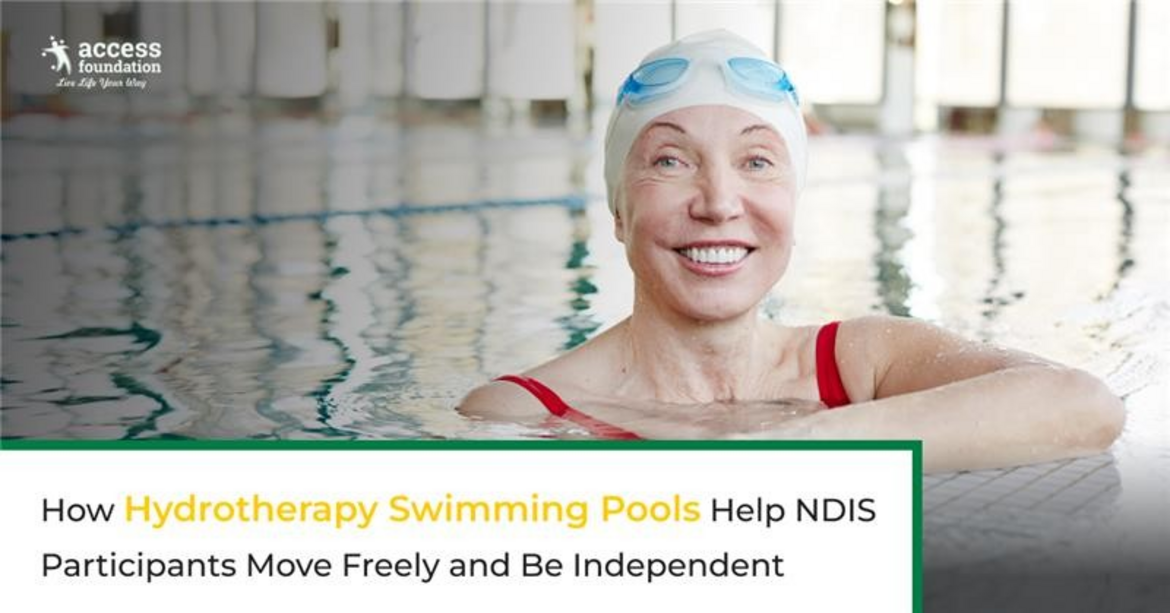
How Hydrotherapy Swimming Pools Help NDIS Participants Move Freely and Be Independent
If you’ve ever relaxed in warm water after a tough day, you know how soothing it can be. Now picture that same comfort but led by professionals, with a real purpose, and specifically made to help your body in ways that regular exercise might not. That’s the reason behind forming hydrotherapy swimming pools, especially for people living with disabilities. It isn’t just “exercise in water”. It's movement without fear of falling and strength building without stress.
Many NDIS participants rely on hydrotherapy to manage pain, increase mobility, recover from injury, and stay active in a way that is gentle on the body.
Let's explore how hydrotherapy swimming pools release relaxation, confidence, and freedom in a way that feels both soothing and empowering.
What exactly are hydrotherapy Swimming Pools?
Simply put, a hydrotherapy pool is a specially designed heated pool of water used for therapeutic exercise. But it is the small details that make it powerful:
- The water is kept at a mild therapeutic temperature (usually 32–35 °C).
- Pools often have rails, ramps, wide stairs, hoists, or accessible entry points.
- Water depth can vary to support different movement abilities.
- Trained physiotherapists or hydrotherapy specialists lead sessions.
What makes hydrotherapy so effective isn’t just the water itself, it’s how your body behaves in it. The springs reduce pressure on joints. Warmth relaxes tight muscles. Resistance supports safe, steady strengthening.
For many people living with a disability, it is one of the few places where the body feels light, free, and less restricted.
Why are Hydrotherapy Swimming Pools so Important for NDIS Participants
It's true that everyday activities can be painful or tiring when you're dealing with chronic pain, neurological conditions, injuries, or mobility challenges. And when land-based training feels difficult, people often lose motivation, confidence, and momentum. This is where hydrotherapy changes the game.
- 1. Less Pressure, More Freedom:The warm water supports your body weight, which means you can move your joints and muscles with much less discomfort. Even small activities become possible again
- 2. Better circulation and less pain:Heat and hydrostatic pressure can help reduce muscle tension and improve blood flow, which often leads to better pain management during and after sessions.
- 3. Gentle strength building:Because water provides natural resistance, the body becomes stronger without stress. People who struggle with traditional physical therapy often find water-based sessions more viable.
- 4. Improved balance and coordination:Water provides stability while challenging balance in a safe way. For many people, this improves gait and strengthens body awareness.
- 5. Confidence increases:When the body feels supported, the mind also relaxes. Many participants reported feeling calmer, more capable, and more motivated after regular hydrotherapy sessions.
Hydrotherapy is not just therapy; It is a place where movement becomes possible again.
How Hydrotherapy Meets Different Needs
Hydrotherapy swimming pools can help people suffering from a number of conditions, including:
- Cerebral palsy
- Autism spectrum disorder
- Acquired or traumatic brain injury
- Spinal cord injury
- Multiple sclerosis
- Arthritis
- Chronic pain conditions
- Stroke recovery
- Muscular dystrophy
- Developmental or physical delays
Everyone uses water differently; that's the beauty of it. Therapy is tailored to each individual's goals, abilities, comfort level, and progress.
Practical, Everyday Benefits You Can Actually Feel
Here’s what many NDIS participants tell us they notice after consistent hydrotherapy sessions:
- 1. Easier movement in the morning
- 2. Improved sleep
- 3. Less stiffness throughout the day
- 4. Better breathing and relaxation
- 5. Increased mobility and confidence when walking
- 6. Improved social connection (hydrotherapy often feels more “fun” than standard therapy)
- 7. Reduced anxiety or sensory challenges
These may seem like small victories, but when added together, they make a meaningful difference in everyday life.
How Hydrotherapy Works Within the NDIS
The NDIS recognises hydrotherapy as an evidence-based therapy that helps many people live more independently.
Hydrotherapy may be funded under:
Capacity Building → Improved Daily Living
Capacity Building → Improved Health and Wellbeing
Main support (in some cases, depending on functional requirements)
If a physical therapist or allied health professional recommends hydrotherapy, it can often be included in your plan.
Your sessions may include:
- Guided 1:1 therapy
- Personalised exercise programs
- Warm-up and mobility routine
- Strength and conditioning in water
- Sensory-friendly water session
- Transition plan to move from hydrotherapy to land-based activities
The goal is always the same: to help you move, feel, and live a better life.
How Access Foundation Helps You Make the Most of Hydrotherapy
At Access Foundation, we see hydrotherapy as more than a therapy appointment; it’s an opportunity to reconnect with your body in a way that feels safe and supported.
We help participants by:
- 1. Organizing access to hydrotherapy swimming pools
- 2. Making sure the pool works well for you and feels nice
- 3. Working with physiotherapists or hydrotherapy experts
- 4. Helping you get ready before sessions, during them, and afterwards
- 5. Assisting you in keeping track of your improvement so you stay motivated and confident
- 6. Changing exercises based on what feels good for you and what you can do
- 7. Collaborating with your overall support team
We simply focus on making hydrotherapy a positive, empowering experience, not just a stressful appointment.
Whether you're new to hydrotherapy or returning after some time away, we'll walk you through each step. If you're ready to learn how hydrotherapy pools can support your goals, movement, or comfort, our team is here to guide you.
FAQs
1. Are hydrotherapy pools different from normal pools?
A: Yes. Hydrotherapy pools are heated, accessible, and designed for therapeutic activity guided by experts. The environment is controlled for pain relief, safety, and ease of movement.
2. Can hydrotherapy be funded through the NDIS?
A: In many cases, yes. If a physiotherapist or allied health professional recommends hydrotherapy for functional improvement, it can be funded under capacity building assistance.
3. Do I need swimming skills to start hydrotherapy?
A: No, hydrotherapy exercises are performed in shallow or backside areas of the pool. It's safe, guided, and tailored to your abilities.
4. How often should I go to hydrotherapy sessions?
A: Most people find it helpful to attend sessions weekly or every two weeks, based on what they need, their goals, and their NDIS support.
5. Can hydrotherapy help with chronic pain?
A: Definitely, the warm water helps lessen pressure on joints, relaxes muscles, and encourages gentle movements, all of which can help make pain easier to manage.