

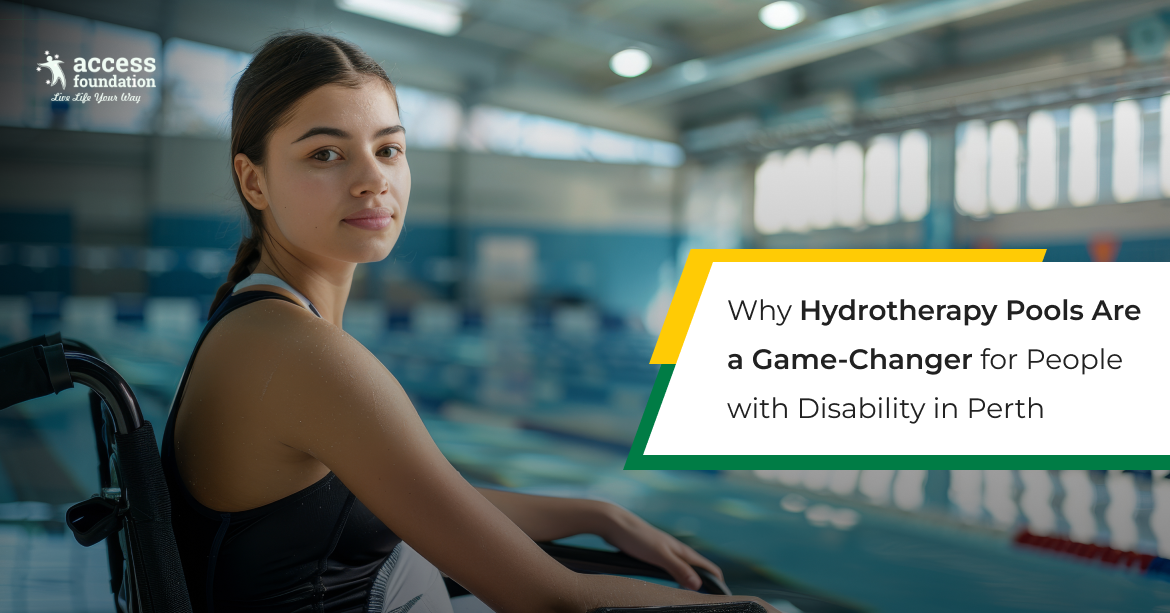
Why Hydrotherapy Pools Are a Game-Changer for People with Disability in Perth
Short answer: a hydrotherapy pool is a warm, accessible pool used for therapist-led exercise. The water supports your body and lowers the load on painful joints, so many people with disabilities can move more easily and with less pain than on land. It is not suitable for everyone, so your therapist screens you first.
This guide explains how hydrotherapy works, who it can help, what to check for safety, and what to look for in a Perth facility. If you want to know about NDIS funding, see our separate guide to NDIS-funded hydrotherapy in Perth.
What is a hydrotherapy pool, and how does it work?
A hydrotherapy pool is built for rehabilitation, not lap swimming. The water is kept warm and controlled, and good facilities have ramps or hoists, accessible change rooms and trained staff. Four properties of water do the work:
- Buoyancy: water holds up part of your body weight, which lowers the pressure on sore or weak joints and muscles.
- Warmth: warm water can relax tight muscles and ease stiffness.
- Resistance: moving through water is harder than moving through air, so you build strength without impact.
- Hydrostatic pressure: the even pressure of water around the body can help with swelling and circulation.
At Access Foundation, sessions run from our hydrotherapy pool and rehab gym.
How can hydrotherapy help people with disabilities?
- Movement and independence: practising movements in water can build confidence you can carry into daily tasks.
- Pain and stiffness: gentle, low-impact exercise in warm water is a common part of chronic pain programs.
- Strength and balance: water resistance and support allow safe practice of standing, stepping and balance.
- Mood and connection: many people find sessions relaxing, and group sessions add social contact.
- Tailored programs: physiotherapists and Accredited Exercise Physiologists set exercises around your goals and ability.
Results vary between people, and hydrotherapy works best alongside the rest of your care plan. It should not replace medical advice or medication changes. Talk to your doctor before changing any medication.
Conditions hydrotherapy is commonly used for
- Arthritis and joint pain: supports easier movement with less joint load.
- Neurological conditions such as multiple sclerosis and cerebral palsy: may help with movement, fatigue and muscle tone.
- Spinal cord injury and reduced mobility: offers supported exercise and rehabilitation.
- Recovery after surgery or injury: a gentle way to rebuild strength and range of movement, once your surgeon or doctor clears it.
Who should check with a doctor first?
Hydrotherapy is not right for every person or every day. Get medical advice before starting if you have any of the following:
- An unstable heart condition or uncontrolled blood pressure
- Epilepsy that is not well controlled
- Open wounds, active infections or certain skin conditions
- Bladder or bowel incontinence that needs managing in the pool
- Difficulty regulating temperature, or a recent illness or fever
A therapist will screen you at your first session, explain what is safe, and adapt or decline hydrotherapy if the risks outweigh the benefits.
What to look for in a Perth hydrotherapy facility
Facility checklist
| Check | What good looks like |
|---|---|
| Access | Ramp or hoist entry, accessible change rooms and toilets, level approach, disability parking |
| Temperature | Warm water maintained at a stable, comfortable level; ask what the temperature is |
| Staff | Physiotherapist or Accredited Exercise Physiologist supervising; ask about qualifications and staff-to-participant ratios |
| Programs | Individual or small-group sessions built around your goals |
| Safety | Screening, emergency procedures and a clear process for reporting incidents |
| Getting there | Transport options; see our guide to NDIS transport |
Visit before you commit, ideally with a carer or support person. Perth has both registered and unregistered providers. If your plan is NDIA-managed you need a registered provider; self-managed and plan-managed participants can use either.
Hydrotherapy vs land-based therapy
Neither is better for everyone. They do different jobs, and many people use both.
| Factor | Hydrotherapy | Land-based therapy |
|---|---|---|
| Joint load | Lower, because buoyancy supports body weight | Higher, but needed to build bone and weight-bearing strength |
| Practising real-world tasks | Limited (for example, you can't practise stairs or transfers the same way) | Strong for functional tasks like transfers and walking aids |
| Strengthening | Gentle resistance in all directions | Can use heavier loads and equipment |
| Practical needs | Needs a pool, changing time and heated water | Easier to access; can be done at home or a clinic |
A therapist can combine them, for example hydrotherapy to build movement with less pain, then land-based exercise to carry it into daily life. Our benefits of hydrotherapy article goes deeper on the evidence.
Hydrotherapy FAQs
How is a hydrotherapy pool different from a regular pool?
It is warmer and built for therapy, usually with ramps or hoists, accessible change rooms and a therapist on hand. A regular pool is cooler and built for swimming.
Do I need to be able to swim?
No. Sessions are supervised, and many exercises are done sitting, standing or with support in shallow water.
Is hydrotherapy safe for everyone?
No. Some conditions need medical advice first. A therapist screens you and adapts the program, or advises against hydrotherapy if it is not safe.
Can hydrotherapy help mental health as well as physical health?
Many people find warm-water exercise relaxing and report a better mood and less stress. It supports, but does not replace, mental health care.
Is hydrotherapy funded by the NDIS?
It can be, when a therapist shows it supports your goals and your plan has suitable funding. It is not automatic. Read our step-by-step guide to NDIS hydrotherapy funding.
Next steps
If you are thinking about hydrotherapy, start with an assessment so a therapist can check it suits you and set goals. Access Foundation is a registered NDIS provider in Perth; see our hydrotherapy pool and rehab gym and NDIS services.
Book a hydrotherapy assessment or call (08) 6243 9569 / 0405 158 234, or email info@accessfoundation.com.au.
This guide is general information, not medical advice. Speak to your doctor or therapist before starting hydrotherapy.