
SIL vs SDA in 2027: Key Differences & What's Changing
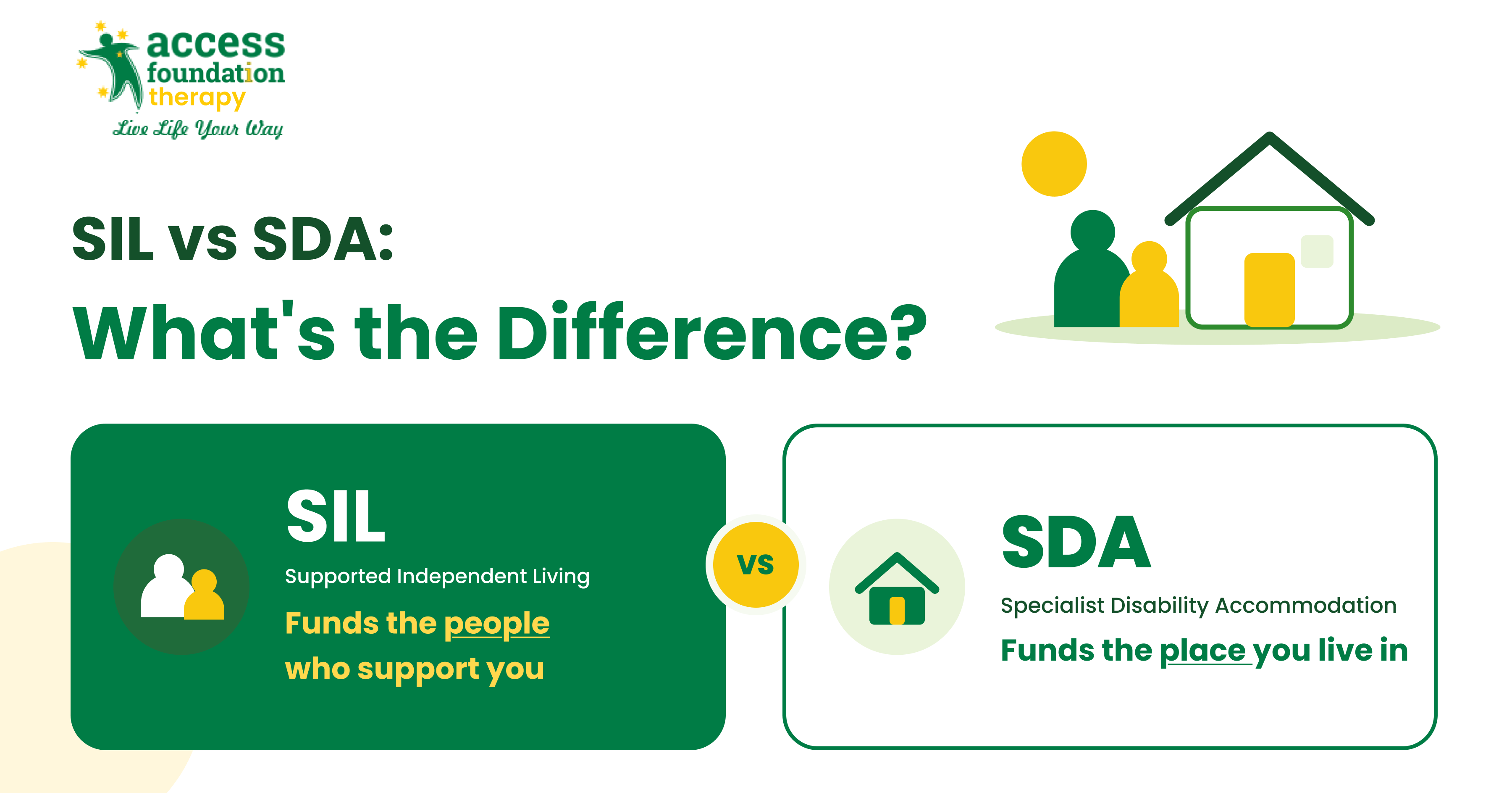
Short answer: SIL (Supported Independent Living) is NDIS funding for the people who support you at home. SDA (Specialist Disability Accommodation) is NDIS funding for the home itself, a property designed for people with extreme functional impairment or very high support needs. Think of it as people versus place. That basic split hasn't changed in 2027. What is changing is how NDIS plans are built and how SIL providers are regulated.
2027 at a glance
- Now: SIL providers must be registered (registration group 0138, in place since 1 July 2026)
- 1 February 2027: changes to how supports are assessed at reassessment and for new participants begin rolling out
- 1 April 2027: new framework planning starts, phased in over time
- 1 July 2027: 2027–28 NDIS Pricing Arrangements expected to take effect
- 1 October 2027: new plan management approach begins, with a 6-month transition
SIL vs SDA: side-by-side comparison
| Feature | SIL – Supported Independent Living | SDA – Specialist Disability Accommodation |
|---|---|---|
| What it funds | Support workers: help and supervision with daily tasks at home | The physical dwelling: specialist design and build |
| In one word | Support | Housing |
| Who it's for | People who need help at home for much of the day, often including overnight | People with extreme functional impairment or very high support needs who meet the SDA criteria |
| NDIS budget | Core supports (Assistance with Daily Life) | Capital supports |
| Where you live | Anywhere: a rental, shared house, your own home, or an SDA home | Only in an SDA-enrolled dwelling |
| Covers rent? | No | No. You pay a reasonable rent contribution to the SDA provider |
| Covers food, bills, personal items? | No | No |
| Provider rules in 2027 | Must be registered (group 0138) and meet the SIL Practice Standards | Must be registered, and the dwelling must be enrolled with the NDIA |
| Evidence usually needed | Functional assessment (often by an OT) and a proposed roster of care | An SDA-specific assessment, usually by an occupational therapist |
| How common | More common | For a small share of NDIS participants |
What is SIL (Supported Independent Living)?
Supported Independent Living (SIL) is NDIS funding for help with, or supervision of, daily tasks so you can live as independently as possible in your home. It is usually shared support, with a few people living together and sharing a roster of support workers, but it can also be delivered in a home where you live on your own.
SIL support workers can help with:
- Personal care such as showering, dressing and medication prompts
- Cooking, cleaning and other household tasks
- Building everyday living skills, so you need less help over time
- Supervision and overnight support, either active (awake) or sleepover
- Support to manage behaviours of concern, where needed
SIL is designed for people who need a significant amount of support across the day, often 24/7. If you only need a few hours of help each week, other assistance with daily living supports are usually a better fit.
What SIL doesn't cover: rent, groceries, utilities, phone or internet, or personal items. You pay these yourself, often by splitting household costs with housemates.
What is SDA (Specialist Disability Accommodation)?
SDA stands for Specialist Disability Accommodation. It is NDIS funding for housing that is purpose-built or modified for people with extreme functional impairment or very high support needs. The funding goes to the SDA provider (the property owner or manager) to cover the extra cost of building and maintaining specialist housing. It doesn't fund any support services.
SDA homes are currently built to one of four design categories:
- Improved Liveability: better physical access and design features for people with sensory, intellectual or cognitive impairment.
- Fully Accessible: high levels of physical access for people with significant physical impairment.
- Robust: strong, resilient construction and layouts that reduce the risk of harm to residents and others.
- High Physical Support: full accessibility plus features such as ceiling hoists, backup power and emergency call systems for people with very high physical needs.
A "Basic" category also exists for older, legacy dwellings. SDA comes in different building types: apartments, villas/duplexes/townhouses, houses, and group homes. The NDIA is developing Edition 2.0 of the SDA Design Standard, so watch for updates to these categories.
Who is eligible for SDA?
To get SDA in your plan you need to show that you have an extreme functional impairment or very high support needs, that SDA is the most appropriate housing option for you, and that it meets the NDIS funding criteria. Most people need a detailed assessment from an occupational therapist plus supporting evidence. Only a small proportion of NDIS participants are found eligible.
Do you pay rent in SDA?
Yes. SDA funding doesn't replace rent. You pay the SDA provider a reasonable rent contribution, which can't exceed the Maximum Reasonable Rent Contribution (MRRC) set in the NDIA's SDA Pricing Arrangements. The MRRC is linked to the Disability Support Pension and Commonwealth Rent Assistance, and is updated during the year, usually around March and September. You also pay everyday costs like food and electricity.
What's changing for SIL and SDA in 2027
The difference between SIL and SDA stays the same in 2027. The changes are to how your NDIS plan is assessed and built, and to the rules for SIL providers. Here's what participants and families in Perth and WA should know.
1. SIL providers must be registered and meet new standards
Since 1 July 2026, SIL has had its own registration group, 0138 – Assistance with supported independent living. Providers that hadn't applied for registration by 1 October 2026 can no longer claim for SIL. Registered SIL providers must also meet the NDIS Commission's SIL Practice Standards. Action: check your provider on the NDIS Commission's provider register.
2. Changes to assessments from 1 February 2027
From 1 February 2027, changes to how reasonable and necessary supports are assessed start rolling out progressively for new participants and at plan reassessment. Action: if your plan is due for reassessment in 2027, make sure your OT and functional assessments and your roster of care are current.
3. New framework planning from 1 April 2027
New framework planning was originally due in mid-2026, but the government delayed it to 1 April 2027. It will be phased in, so most participants will move across over time, usually at a plan reassessment, rather than all at once. Under the new approach, plans are built around a total budget based on an assessment of your support needs. The detailed rules were still being finalised in late 2026.
4. New plan management approach from 1 October 2027
A new approach to plan management begins on 1 October 2027, with a 6-month transition period. If your SIL or other supports are plan managed, your plan manager should explain what this means for you.
5. SIL commissioning and separating SIL from SDA (still being decided)
The government is consulting on commissioning home and living supports. In practice, that could mean the NDIA plays a bigger role in arranging SIL for people who need 24/7 support. Options for separating SIL from SDA, so the same organisation doesn't control both your home and your support, are also being considered. None of this has been finalised. We'll update this guide when decisions are announced.
6. New prices from 1 July 2027
The NDIA reviews prices every year. The 2027–28 NDIS Pricing Arrangements, including SIL price limits, are expected to apply from 1 July 2027. SDA prices and the MRRC are also updated during the year.
The 5 key differences between SIL and SDA
- People vs property. SIL pays for support workers. SDA pays for the building.
- Eligibility bar. SDA is only for people with extreme functional impairment or very high support needs. SIL is available to a wider group who need significant daily support.
- Where it applies. SIL goes with you to any home. SDA only applies in an NDIA-enrolled SDA dwelling.
- Budget. SIL is in your Core supports. SDA is in your Capital supports.
- Who's paid. SIL funding pays your support provider. SDA funding pays the housing provider. These can be, and often should be, different organisations.
How SIL and SDA work together
Many people in SDA homes also receive SIL, because the same high needs that qualify someone for specialist housing usually mean they need support at home too. But the two are separate agreements:
- a tenancy or SDA residency agreement with your SDA provider (the home), and
- a service agreement with your SIL provider (the support).
Keeping them separate protects your choice and control. If you're unhappy with your support, you can change SIL providers without losing your home. It's also the direction the 2027 reforms are heading.
Four common combinations
| Situation | SIL? | SDA? | Example |
|---|---|---|---|
| Support in a regular home | Yes | No | Three housemates in a rental, sharing 24/7 support |
| Specialist home, other supports | No | Yes | Living in a Fully Accessible apartment with an ILO package or a few hours of daily help |
| Specialist home and shared support | Yes | Yes | A High Physical Support villa with 24/7 SIL |
| Neither | No | No | Living with family, using community and daily living supports |
Where does ILO fit? (SIL vs SDA vs ILO)
Individualised Living Options (ILO) is an NDIS support package built around one person's preferred way of living, rather than a shared roster. It's often used for host arrangements, living with a housemate who provides some support, or living with family with paid and unpaid help combined.
- ILO vs SIL: both fund support at home. SIL is rostered, usually shared paid support. ILO is designed around you and often mixes paid and informal support. ILO is generally an alternative to SIL, not an add-on.
- ILO vs SDA: ILO funds support; SDA funds housing. You can use ILO in an SDA home.
Learn more in our guide: NDIS Individualised Living Options explained.
How to get SIL or SDA in your NDIS plan in 2027
- Talk about your home and living goals with your NDIA planner, LAC or support coordinator. Be specific about where and how you want to live.
- Get the right evidence. A current functional assessment from an occupational therapist is usually the backbone. For SDA you'll need an SDA-specific assessment that explains why other housing options won't work. With assessment changes rolling out from February 2027, up-to-date evidence matters more than ever.
- Submit a home and living request with your supporting evidence to the NDIA.
- For SIL, your provider prepares a proposed roster of care showing the support needed across the week.
- For SDA, once it's in your plan, find a vacancy in an enrolled dwelling that matches your approved design category, building type and location.
- Check registration of both providers on the NDIS Commission register before signing anything.
Your 2027 checklist
- Confirm your SIL provider is registered under group 0138
- Find out when your next plan reassessment is due
- Update your OT or functional assessment if it's more than 12 months old
- Ask your SIL provider for an up-to-date roster of care
- Check your SDA rent contribution is within the current MRRC
- If you're plan managed, ask your plan manager about the October 2027 changes
Choosing a SIL provider in Perth: 7 questions to ask
- Are you registered for SIL (registration group 0138)?
- How do you meet the SIL Practice Standards?
- How do you match housemates, and what happens if housemates don't get along?
- How do you build each person's independence, not just provide care?
- What's your staff turnover, and will I have a consistent team?
- How are overnight supports provided: active or sleepover?
- If I want to change providers, can I stay in my home?
Frequently asked questions
What is the main difference between SIL and SDA?
SIL (Supported Independent Living) funds the support workers who help you with daily tasks at home. SDA (Specialist Disability Accommodation) funds the specially designed home itself. Think of it as people versus place. You can have one, the other, or both.
What does SDA stand for in the NDIS?
SDA stands for Specialist Disability Accommodation. It is NDIS funding for homes built or modified for people with extreme functional impairment or very high support needs.
What is changing for SIL and SDA in 2027?
From 1 February 2027, changes to how supports are assessed at reassessment and for new participants begin to roll out. New framework planning starts from 1 April 2027 and will be phased in over time. A new plan management approach starts from 1 October 2027. SIL providers must already be registered under registration group 0138, and the government is consulting on commissioning SIL and separating SIL from SDA. SDA eligibility and the basic SIL vs SDA split have not changed.
Will new framework planning affect my SIL funding?
Participants will move to new framework plans gradually from 1 April 2027, usually when their plan is reassessed. Your SIL stays in your current plan until then. Keep your functional assessment and roster of care evidence up to date so your support needs are clear when you transition.
Can I get SIL without SDA?
Yes. Most people who receive SIL live in ordinary rental homes, shared houses or their own homes, not SDA. SIL pays for the support, wherever you live.
Does SDA or SIL pay my rent?
No. In SDA you still pay a reasonable rent contribution to the SDA provider, capped at the Maximum Reasonable Rent Contribution set by the NDIA, plus everyday costs like food and electricity. SIL never covers rent, food or bills.
Do SIL providers have to be NDIS registered in 2027?
Yes. Since 1 July 2026 SIL has had its own registration group (0138), and providers that had not applied for registration by 1 October 2026 can no longer claim for SIL. SDA providers must also be registered with the NDIS Quality and Safeguards Commission.
Can my SIL provider and SDA provider be different organisations?
Yes. Your home (SDA) and your support (SIL) are separate, so you can change your support provider without having to move house.
How is ILO different from SIL?
Individualised Living Options (ILO) is a flexible package designed around one person, often using host arrangements, housemates or informal supports. SIL is rostered, usually shared paid support. ILO is generally an alternative to SIL, not an add-on.
Summary
If you remember one thing: SIL = support, SDA = housing. That's as true in 2027 as it was before. What's new is stricter rules for SIL providers, a new way of building NDIS plans from April 2027, and ongoing reform of how home and living supports are arranged. Keep your evidence current, check your providers are registered, and keep your home and your support separate so you can change one without losing the other.
Get ready for 2027 with Access Foundation
Access Foundation is a registered NDIS provider supporting people across Perth and Western Australia, from Ascot and Balcatta to Girrawheen, Westminster and Mandurah. We can talk you through SIL, shared living and accommodation options, and help you prepare for your next plan reassessment.
Contact us or call (08) 6243 9569.
Sources
- NDIS, What is specialist disability accommodation (SDA)
- NDIS, SDA pricing arrangements
- NDIS, SIL claims and payment changes from 1 July 2026
- NDIS Quality and Safeguards Commission, Supported accommodation
- NDIS Quality and Safeguards Commission, Find a registered provider
- Department of Health, Disability and Ageing, Securing the NDIS for future generations
This article is general information, not advice about your individual NDIS plan. NDIS rules and prices change, and some 2027 reforms were still being finalised when this guide was written. Check ndis.gov.au or speak with your planner or support coordinator.