
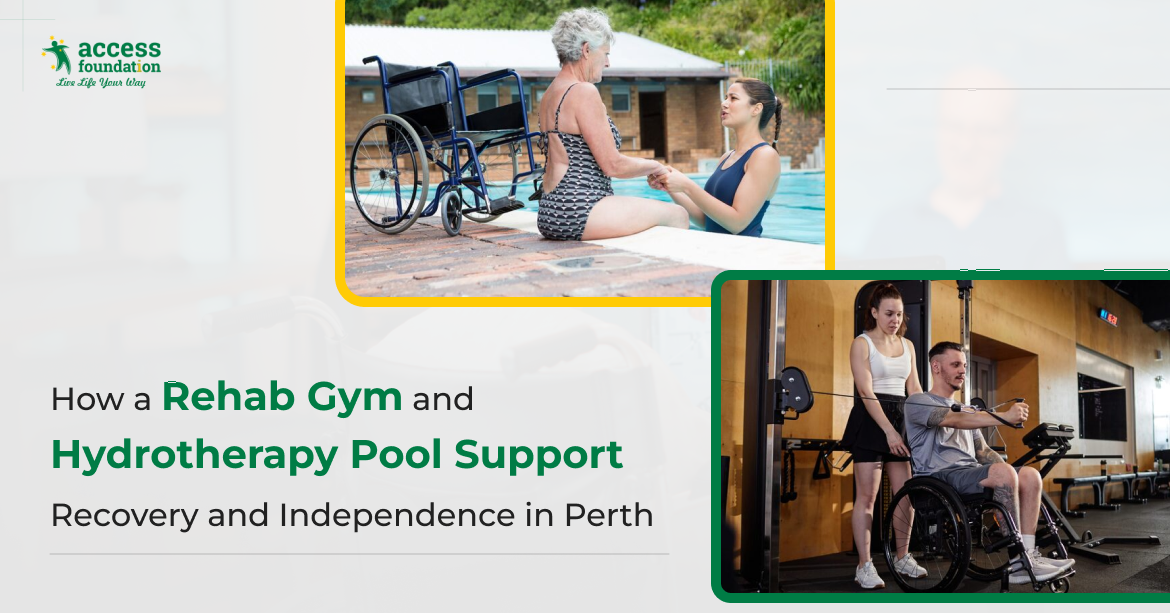
How a Rehab Gym and Hydrotherapy Pool Support Recovery and Independence in Perth
Introduction
Recovery, mobility improvement, and independent living are important goals for many people living with disability, injury, or long-term health conditions. Access to the right therapeutic environment can significantly improve physical function, confidence, and participation in everyday activities.
A well-equipped Rehab Gym combined with hydrotherapy programs provides a safe and structured approach to rehabilitation. These services help participants build strength, improve mobility, increase endurance, and develop greater independence in their daily lives.
For individuals accessing disability supports in Western Australia, understanding the benefits of rehabilitation-focused services can help them make informed decisions about their health and wellbeing. Organizations like Access Foundation support participants by connecting them with appropriate therapies and programs that align with their NDIS goals.
Why a Rehab Gym Plays a Key Role in Recovery and Rehabilitation
Modern rehabilitation programs are designed to support participants at different stages of their recovery journey. A Rehab Gym provides access to specialized equipment, structured exercise plans, and professional support that help individuals improve their physical capabilities safely.
How a Rehab Gym Helps Improve Strength and Mobility
Physical strength and mobility are essential for performing daily tasks independently.
A rehabilitation-focused exercise program can help participants:
- Improve muscle strength
- Increase flexibility
- Enhance balance and coordination
- Build endurance
- Reduce physical limitations
These improvements can make everyday activities easier and more manageable.
Supporting Long-Term Physical Health Through Exercise
Regular exercise performed in a supervised environment can contribute to better long-term health outcomes.
Benefits may include:
- Improved cardiovascular health
- Better joint mobility
- Reduced risk of falls
- Enhanced posture and movement patterns
- Greater confidence in physical activities
Building Confidence Through Structured Rehabilitation
Recovery is not only about physical improvement. As participants achieve goals and notice progress, their confidence often increases as well.
This confidence can encourage greater participation in community, social, and recreational opportunities.
Understanding What is a Hydrotherapy Pool and How It Supports Recovery
Many participants and families ask, What is a Hydrotherapy Pool and why is it commonly used in rehabilitation programs?
A Hydrotherapy Pool is a specially designed heated pool used for therapeutic exercises and rehabilitation activities.
The warm water environment provides unique benefits that may not be achievable through land-based exercise alone.
How Warm Water Creates a Supportive Exercise Environment
Water naturally supports body weight, reducing pressure on joints and muscles.
This allows participants to:
- Move more comfortably
- Perform exercises with less pain
- Improve flexibility
- Increase movement range
For individuals with mobility challenges, hydrotherapy can make exercise more accessible.
Benefits of Hydrotherapy for Physical Rehabilitation
Hydrotherapy programs can support:
- Injury recovery
- Neurological rehabilitation
- Chronic pain management
- Balance improvement
- Muscle strengthening
The resistance provided by water also helps build strength without placing excessive stress on the body.
Combining Hydrotherapy and Gym-Based Rehabilitation
Many rehabilitation programs achieve the best results when hydrotherapy sessions are combined with gym-based exercises.
This approach allows participants to benefit from both water-based movement and land-based strength training.
How a Rehab Gym Supports Greater Independence in Everyday Life
One of the primary goals of rehabilitation is helping individuals become more independent.
A Rehab Gym supports this objective by improving the physical abilities needed for daily living.
Improving Functional Movement Skills
Functional movements are the activities people perform every day, such as:
- Walking
- Standing from a chair
- Carrying items
- Climbing stairs
- Reaching and bending
Rehabilitation exercises are often designed to improve these practical skills.
Reducing Dependence on Support Services
As physical abilities improve, participants may become more confident in managing certain daily activities independently.
This can contribute to greater self-reliance and improved quality of life.
Supporting Personal Goals Through Rehabilitation
Every participant has unique goals.
Some may wish to improve mobility, while others may focus on community participation or increased physical fitness.
Rehabilitation programs can be tailored to support these individual objectives.
The Connection Between Rehabilitation and Life Skills Perth Programs
Physical recovery is only one part of living independently.
Programs focused on Life Skills Perth help participants develop practical skills that support daily living and community engagement.
Developing Confidence in Everyday Activities
Life skills programs often focus on:
- Personal care routines
- Household management
- Communication skills
- Community participation
- Goal setting
Improved physical ability can make it easier for participants to apply these skills in real-world situations.
Supporting Holistic Development
Combining rehabilitation with life skills development creates a more comprehensive support approach.
Participants can improve both their physical capabilities and practical independence.
How Rehabilitation Supports Participation in Recreational Activities
Participation in Recreational Activities can play an important role in overall wellbeing.
Improved strength, mobility, and confidence often encourage participants to become more active in their communities.
Benefits of Recreation for Health and Wellbeing
Recreational participation can support:
- Social connections
- Mental wellbeing
- Physical fitness
- Community engagement
- Personal enjoyment
Building Confidence Through Active Participation
As participants gain confidence through rehabilitation, they may feel more comfortable exploring new hobbies and experiences.
This can contribute to a more active and fulfilling lifestyle.
The Role of NDIS Support in Accessing Rehabilitation Services
Many participants access rehabilitation supports through the NDIS.
Working with experienced NDIS Service Providers can help individuals identify suitable therapies and programs that align with their goals.
Understanding Available Supports Through NDIS Services Perth
Quality NDIS Services Perth may include:
- Therapy supports
- Community participation programs
- Capacity-building supports
- Rehabilitation-focused services
- Allied health programs
The availability of these supports depends on individual plans and goals.
How an NDIS Plan Management Provider WA Can Help
An experienced NDIS Plan Management Provider WA can assist participants with managing budgets, processing invoices, and maximizing the value of their NDIS funding.
This support can make accessing services simpler and more efficient.
Choosing a Registered NDIS Service Provider for Rehabilitation Support
Working with a Registered NDIS Service Provider offers additional confidence that services meet NDIS quality and safety requirements.
Participants should consider provider experience, service offerings, and individual support approaches when making decisions.
Rehabilitation and Supported Independent Living Outcomes
For some participants, improved physical function can support greater success in Supported Independent Living arrangements.
Building Skills for Independent Living
Physical rehabilitation can help participants improve abilities required for daily living tasks such as:
- Mobility around the home
- Personal care activities
- Household responsibilities
- Community access
Supporting Long-Term Independence Goals
As participants build strength and confidence, they may become better equipped to manage daily routines and achieve greater independence.
This can contribute positively to long-term living outcomes.
Comparing Hydrotherapy and Rehab Gym Benefits
| Rehabilitation Feature | Hydrotherapy Pool | Rehab Gym |
|---|---|---|
| Low-impact exercise | ✓ | Limited |
| Strength building | ✓ | ✓ |
| Joint support | ✓ | Limited |
| Functional movement training | ✓ | ✓ |
| Mobility improvement | ✓ | ✓ |
| Balance development | ✓ | ✓ |
| Endurance training | Moderate | High |
| Independence support | ✓ | ✓ |
How Access Foundation Supports Participants on Their Recovery Journey
Access Foundation is committed to supporting participants in achieving their goals through personalized and participant-focused services.
By connecting individuals with suitable therapies, rehabilitation programs, and capacity-building supports, Access Foundation helps participants improve their wellbeing, enhance independence, and increase participation in everyday life.
Whether the goal is improving mobility, developing life skills, or building confidence through community engagement, the right support can make a meaningful difference.
Conclusion
A Rehab Gym and hydrotherapy program can play a valuable role in supporting recovery, mobility improvement, and greater independence. By combining structured exercise, therapeutic support, and individualized goals, participants can build strength, improve confidence, and enhance their quality of life.
Understanding What is a Hydrotherapy Pool and how rehabilitation services work can help participants make informed decisions about their support options. When combined with quality NDIS services, life skills development, and community participation opportunities, rehabilitation can contribute to meaningful long-term outcomes.
With support from experienced providers such as Access Foundation, participants can access the resources and guidance needed to move toward greater independence and wellbeing.