

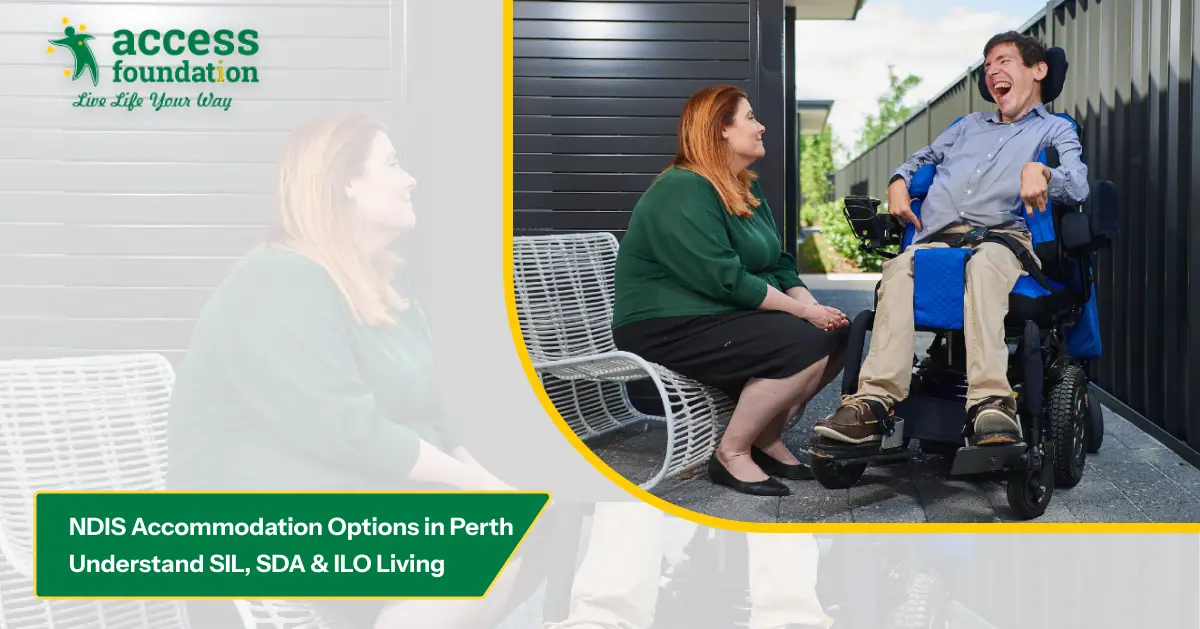
NDIS Disability Accommodation Options Explained: SIL, SDA & ILO Living in Perth (2026 Guide)
Understanding Disability Accommodation in NDIS
Choosing the right housing support is one of the most important decisions for participants, as it directly impacts independence, comfort, and overall lifestyle. Many people feel confused when exploring different accommodation options under the NDIS because each option serves a different purpose and level of support.
Disability Accommodation refers to housing solutions designed to support individuals with specific needs. These options are created to improve safety, accessibility, and long-term well-being. They are not just about housing but also about creating an environment that supports daily living.
Each accommodation type focuses on different levels of independence and care. Some are designed for high-support needs, while others encourage flexible and independent living through models like Individualised Living Options. Understanding these differences helps participants make confident and informed decisions.
Key overview:
- Different housing options for different needs
- Focus on safety, independence, and comfort
- Designed for long-term support
- Improves daily living and quality of life
Types of Disability Accommodation Available in Perth
Participants in Perth have access to a variety of Accommodation options, each tailored to different support levels and preferences. These options provide flexibility and allow individuals to choose what best suits their lifestyle and needs.
The most common types include SIL, SDA, and ILO. These options such as Supported Independent living NDIS and Specialist Disability Accommodation NDIS provide structured and specialised support. Understanding how they differ helps participants choose the right living arrangement.
Selecting the right option ensures better support, improved independence, and a higher quality of life. It also helps participants align their living environment with their personal goals.
Main accommodation types:
- Supported Independent Living (SIL)
- Specialist Disability Accommodation NDIS
- Individualised Living Options
- Shared or independent living setups
Benefits of Choosing Disability Accommodation
Selecting the right accommodation provides multiple benefits that improve both daily living and long-term outcomes. It helps participants live in a safe environment while receiving the support they need.
Participants experience increased independence, better access to services, and improved confidence. Support models like Supported Independent living NDIS play a key role in building daily life skills and independence. Over time, this leads to better emotional and physical well-being.
It also reduces stress for families, as participants receive structured and professional support. This ensures a balanced lifestyle and better future planning.
Key benefits:
- Improved independence
- Better safety and accessibility
- Personalised support
- Enhanced quality of life
Supported Independent Living with Disability Accommodation
Supported Independent Living allows participants to live with a level of independence while receiving support for daily tasks. This option is ideal for individuals who need regular assistance but still want control over their daily routines.
Participants may live alone or share accommodation with others. Support workers assist with daily activities such as cooking, cleaning, and personal care. This creates a balance between independence and structured support.
SIL benefits:
- Daily support assistance
- Encourages independence
- Flexible living arrangements
Specialist Disability Accommodation NDIS
Specialist Disability Accommodation NDIS is designed for participants with high support needs. These homes are purpose-built with accessibility features to ensure safety and comfort.
They include features such as wide doorways, assistive technology, and accessible layouts. This allows participants to live comfortably while receiving the required level of care.
SDA benefits:
- High-level support
- Specialised housing design
- Improved safety and accessibility
Individualised Living Options
Individualised Living Options provide flexible and personalised housing arrangements. Participants can choose how and where they live based on their preferences and goals.
This may include living with a host family or creating a customised support system. It focuses on giving participants full control over their living environment.
ILO benefits:
- Custom living arrangements
- Greater flexibility
- Personalised support
Supported Independent living NDIS
Supported Independent living NDIS focuses on building life skills and supporting participants in managing their daily routines. It promotes long-term independence and self-reliance.
Participants receive structured support that helps them develop confidence and improve their ability to handle daily tasks. This model works alongside options like Individualised Living Options to offer flexibility.
SIL (NDIS) benefits:
- Skill development
- Routine management
- Increased confidence
Role of Accommodation Providers in Perth
Accommodation providers play a critical role in ensuring that participants receive high-quality support and safe living environments. They are responsible for managing housing facilities and delivering support services.
Providers also ensure compliance with NDIS standards. They work closely with participants to understand their needs and provide personalised solutions, including options like Specialist Disability Accommodation NDIS for higher support requirements.
Choosing the right provider directly impacts the overall experience. A good provider ensures comfort, safety, and consistent support.
Provider roles:
- Manage housing and facilities
- Provide support staff
- Ensure safety and compliance
- Improve participant experience
Comparison Table: SIL vs SDA vs ILO
Understanding the differences between accommodation options becomes easier when comparing them side by side. Each option offers a unique level of support and independence, including Supported Independent living NDIS, Specialist Disability Accommodation NDIS, and Individualised Living Options.
| Accommodation Type | Focus Area | Support Level | Best For |
|---|---|---|---|
| SIL | Daily living support | Medium to High | Participants needing regular help |
| SDA | Specialised housing | High | Complex support needs |
| ILO | Flexible living | Low to Medium | Independent lifestyle seekers |
How to Choose the Right Accommodation Option
Choosing the right accommodation depends on individual needs, preferences, and long-term goals. Participants should carefully assess their level of independence and required support.
It is important to consider daily living needs, budget, and future goals. Options like Individualised Living Options and Supported Independent living NDIS can provide flexibility depending on personal requirements.
Professional guidance can help simplify the process and ensure better decision-making. Taking time to evaluate options leads to better outcomes and long-term satisfaction.
Key factors to consider:
- Level of support required
- Personal goals
- Budget and funding
- Location and accessibility
Why Choose Access Foundation
Choosing a reliable provider ensures better support and improved outcomes for participants.
Access Foundation offers personalised accommodation solutions tailored to individual needs. Their team focuses on creating safe, comfortable, and supportive living environments, including Specialist Disability Accommodation NDIS and supported living setups.
They combine professional care with practical solutions. This helps participants achieve independence while receiving the right level of support.
Their approach ensures long-term satisfaction and improved quality of life.
Why choose them:
- Experienced team
- Personalised support
- Quality housing options
- Reliable services
Common Challenges in Finding Accommodation
Finding suitable accommodation can be challenging for many participants, especially when there are multiple options available such as Supported Independent living NDIS or Individualised Living Options. Understanding these challenges helps in making better decisions and avoiding common mistakes.
Limited awareness about different accommodation types is a major issue. Budget constraints can also affect the final decision, especially for specialised options like Specialist Disability Accommodation NDIS.
Finding the right provider takes time and effort. Without proper guidance, participants may feel overwhelmed during the selection process.
Common challenges:
- Limited awareness
- Budget constraints
- Finding suitable providers
- Decision-making confusion
Expert Tips for Better Accommodation Decisions
Making the right accommodation choice requires careful planning and evaluation. Experts recommend understanding personal needs before selecting any option.
Comparing different services helps participants identify the most suitable solution. It also ensures better value and long-term satisfaction across options like Individualised Living Options and Supported Independent living NDIS.
Regular reviews of accommodation plans help in adapting to changing needs. This ensures continuous improvement and better outcomes.
Expert tips:
- Assess your needs
- Compare options
- Seek professional advice
- Review your plan regularly
Long-Term Benefits of Disability Accommodation
Choosing the right accommodation improves independence, stability, and overall quality of life over time.
Benefits of Supported Living in Perth
Supported living provides a balanced lifestyle where participants receive necessary support while maintaining independence. It creates a safe and structured environment for daily living, especially through services like Supported Independent living NDIS.
Participants benefit from professional care and access to essential services. Options like Specialist Disability Accommodation NDIS further enhance safety for high-support needs.
Over time, supported living builds confidence and encourages independent decision-making.
Key benefits:
- Safe living environment
- Professional support
- Increased independence
- Better quality of life
Frequently Asked Questions
Q1. What is disability accommodation?
It refers to housing designed for individuals with support needs.
Q2. What is the difference between SIL and SDA?
SIL focuses on support, while SDA focuses on housing design.
Q3. What is ILO?
It is a flexible and personalised living arrangement.
Q4. Is accommodation covered under NDIS?
Yes, it can be funded based on eligibility.
Conclusion
Choosing the right accommodation is important for independence and long-term well-being. Understanding options like Supported Independent living NDIS, Specialist Disability Accommodation NDIS and Individualised Living Options helps participants make informed decisions.
With support from Access Foundation, participants can access the right accommodation and improve their overall quality of life.